How to Control OpenAI API Costs Before They Escalate

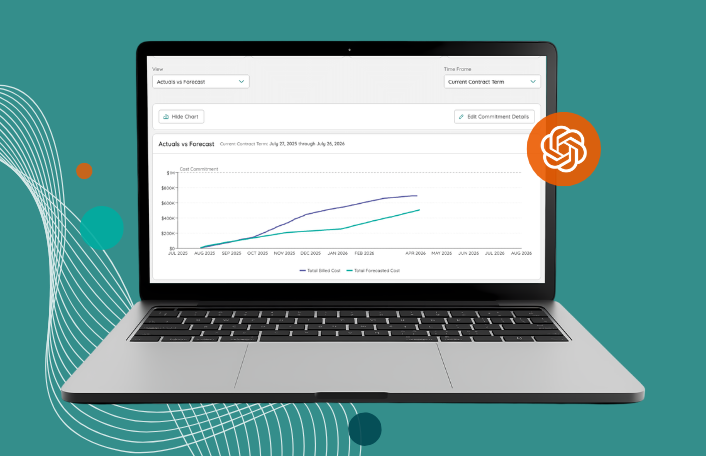
OpenAI API costs an organization $384,500 annually on average, according to Zylo data, as of April 2026. Considering AI-native application spend soared 108% in 2025, budget pressure will only continue to increase.
The primary challenge is cost variability, as OpenAI API spend can fluctuate significantly based on how applications behave in production. Model selection, token volume, and workflow design also influence cost, meaning the same use case can produce vastly different outcomes.

As organizations adopt AI and shift toward consumption-based pricing, managing this variability requires a shift from static budgeting to continuous consumption cost management. According to Zylo’s 2026 SaaS Management Index, 78% of IT leaders experienced unexpected charges tied to AI and consumption, and 60% lack full visibility into generative AI usage.
This is where consumption cost management for AI and API-driven spend becomes critical. IT, SAM, and FinOps teams need to connect OpenAI API usage to cost, monitor how consumption impacts spend, and take action before overages occur.
In this blog, I’ll break down OpenAI API pricing and cost drivers, best practices to optimize AI spend, and how Zylo helps IT, SAM, FinOps leaders control consumption costs.
What Is OpenAI API Pricing?
OpenAI API pricing is a consumption-based pricing model where organizations are charged based on how application, agent, or workflow usage translates into cost. Instead of fixed licenses, pricing is tied to measurable units such as tokens, image generation, and other metered activity.
Each API request generates consumption data—such as input tokens, output tokens, or tool usage—which is then mapped to cost based on the model and pricing tier. This structure directly links how applications use the OpenAI API to overall spend.
For IT, SAM, and FinOps teams, OpenAI API pricing shifts cost management from tracking licenses to understanding how consumption drives financial impact.
Usage-Based Pricing vs. Subscription Pricing
OpenAI API’s pricing model differs significantly from traditional subscription pricing used in SaaS and some LLM tools.
AI-driven applications introduce a different cost dynamic. OpenAI API consumption can be generated continuously by applications and workflows, often without direct user interaction. As a result, spend can increase even when headcount remains unchanged.
What Consumption-Based Pricing Means in Practice
OpenAI API pricing connects consumption directly to cost. Managing it effectively requires understanding how application behavior drives spend across models, workflows, and teams.
In my experience, small changes in how applications are built or scaled can significantly impact total spend. The same application can produce very different costs depending on:
- Request structure
- Model selection
- How often the API is called
Architectural decisions—such as how workflows are structured or how data is passed to the API—directly determine how consumption translates into cost.
As a result, the cost model behaves more like cloud infrastructure (IaaS) than traditional SaaS. Costs are dynamic, distributed across teams, and influenced by both engineering decisions and usage patterns. In addition, new modules introduce higher pricing and more complexity.
OpenAI API Pricing by Model (2026 Overview)
OpenAI API pricing varies by model, with costs determined by how each model processes input and generates output. Different models charge different rates per token, which directly impacts how consumption translates into total cost.
Model Pricing Overview and Tradeoffs
The table below outlines how OpenAI API model pricing differs across tiers, as of April 23, 2026. While exact rates may change, the cost structure and tradeoffs remain consistent.
Source: OpenAI
Each model tier reflects a tradeoff between cost, performance, and efficiency. Selecting the right model determines how much consumption is required to complete a task—and therefore how much it costs.
Which OpenAI Model Is Cheapest for API Usage?
Lightweight models (often labeled mini or nano) are typically the lowest-cost option based on price per token.
They are best suited for:
- High-volume automation
- Simple transformations or classification
- Background processing tasks
Lower per-token pricing reduces cost at the unit level, but total cost still depends on how many tokens and requests are required to complete a workflow.
How Model Choice Impacts OpenAI API Costs
Model selection influences OpenAI API costs across multiple dimensions:
- Cost per token: Higher-tier models charge more for input and output tokens
- Number of requests: More capable models can reduce the number of calls required
- Workflow complexity: Simpler models may require additional steps
- Token efficiency: Larger models may generate longer or more detailed outputs
A lower-cost model that requires multiple requests can generate higher total spend than a higher-capability model that completes the task in a single step. Evaluating OpenAI API pricing requires focusing on cost per outcome, not just cost per token.
Key Takeaway:
OpenAI API model pricing influences how efficiently consumption converts into cost. Selecting the right model requires evaluating total cost per outcome, not just price per token.
How Tokens, Input, and Output Drive OpenAI API Pricing
OpenAI API pricing is driven by tokens, which determine how much data is processed in each request and how that consumption translates into cost. Every interaction with the OpenAI API—whether generating text, embedding data, or running a workflow—consumes tokens that are billed based on how they are used.
Understanding how tokens work is essential because even small increases in token volume can significantly impact total OpenAI API costs at scale.
What Is a Token in OpenAI API Pricing?
A token is a unit of text that the model processes when handling a request and can represent:
- Words (e.g., “pricing”)
- Parts of words (e.g., “consump” + “tion”)
- Characters or punctuation
In practical terms:
- A short sentence may use 10–20 tokens
- A detailed prompt with context and instructions can use hundreds or thousands of tokens
Each token processed contributes to the total cost. As token volume increases, so does spend.
Key Takeaway
More text = more tokens = higher cost
Input vs Output Tokens Explained
OpenAI API pricing separates tokens into input tokens and output tokens, and both contribute to cost.
- Input tokens include:
- Prompts and instructions
- Retrieved context or data
- Conversation history
- Tool definitions
- Output tokens include:
- Generated responses
- Summaries or structured outputs
- Model-generated reasoning (for some models)
Output tokens are often priced higher than input tokens. As a result, longer responses can increase total cost faster than expected.
Each request typically includes both input and output tokens, so I recommend teams understand how both contribute to overall spend.
Why Token-Based Pricing Creates Cost Variability
Token-based pricing leads to cost variability because token volume changes based on real-world application behavior.
Common scenarios that increase token-driven costs include:
- Longer sessions: Applications that retain context increase token volume over time
- Expanded prompts: Additional instructions or retrieved data increase input tokens
- Verbose outputs: Longer responses increase output tokens
- Retries and failures: Additional requests increase total tokens processed, and failed executions can silently increase cost in high-volume or automated workflows
- Multi-step workflows: Each step generates additional token consumption
Key Takeaway:
OpenAI API pricing is directly tied to token volume. Managing cost requires controlling how tokens are generated across inputs, outputs, and workflows as usage scales.
How to Calculate OpenAI API Costs
OpenAI API costs are calculated by combining token consumption, model pricing, and request volume. Each API call generates measurable consumption, which is then translated into cost based on pricing rates.
At a basic level, OpenAI API pricing follows a consistent formula.
OpenAI API Pricing Formula
Total Cost = (Input Tokens × Input Price) + (Output Tokens × Output Price)To apply this formula in practice:
- Estimate tokens per request
- Input tokens (prompt, context, instructions)
- Output tokens (response length)
- Apply model pricing
- Cost per 1M tokens (input vs output)
- Model tier (flagship, mid-tier, lightweight)
- Calculate cost per request
- Combine token volume with pricing rates
- Scale by request volume
- Requests per user
- Total users or workflows
- Frequency over time
OpenAI API Pricing Per Request Example
Example 1: Chatbot Response
Assume you're using the GPT-5.4 model with approximate pricing:
- Input: $2.50 per 1M tokens
- Output: $15 per 1M tokens
Usage per request:
- Input: 1,000 tokens
- Output: 2,250 tokens
Estimated cost per request:
- Input cost = (1,000 / 1,000,000) × $2.50 = $0.0025
- Output cost = (2,250 / 1,000,000) × $15.00 = $0.03375
- Total cost per request ≈ $0.03625
Now scale that:
- 3,000 users per day
- 5 requests per user → 15,000 requests/day
👉 Estimated daily cost ≈ $543.75
👉 Estimated monthly cost (20 business days) ≈ $10,875
👉 Estimated annual cost (250 business days) ≈ $135,973.50
Example 2: Content Summarization Workflow
Using the same pricing model:Usage per request:
- Input: 3,000 tokens
- Output: 600 tokens
Estimated cost per request:
- Input cost = (3,000 / 1,000,000) × $2.50 = $0.0075
- Output cost = (600 / 1,000,000) × $15 = $0.009
- Total cost per request ≈ $0.0165
Now scale that to 10,000 documents processed per month
👉 Estimated monthly cost ≈ $165
👉 Estimated annual cost ≈ $1,980
Why Cost Estimates Often Fall Short
OpenAI API cost estimates often underrepresent total spend because they assume stable usage patterns. In production, consumption changes over time.
Common gaps include:
- Underestimating request volume growth
- Ignoring multi-step workflows or agents
- Not accounting for retries and failures
- Non-production environments such as testing and staging can generate significant consumption, often without clear cost controls
- Missing additional cost drivers (tools, storage, multimodal inputs)
- Users adopting the newest models that cost more
Each of these factors increases total consumption, which directly increases cost.
Why OpenAI API Costs Are Hard to Predict
OpenAI API costs are difficult to predict because consumption changes continuously as applications scale, evolve, and expand across the organization. Even with a clear pricing model, small shifts in how the API is used can lead to significant changes in total cost.
Cost variability is driven less by pricing complexity and more by how consumption behaves in production environments.
Consumption Varies Across Applications and Teams
OpenAI API consumption is often fragmented across applications, environments, and providers, making it difficult to build a complete view of how cost is generated.
Common sources of variability include:
- Customer-facing applications
- Internal automation workflows
- Experimental or staging environments
- Background processing jobs
Small Changes Can Drive Large Cost Increases
Minor adjustments to application behavior can significantly impact cost, such as:
- Switching to more cost-effective models
- Adding more context to prompts
- Expanding retrieved data in workflows
- Increasing response length for better output quality
Each change can increase token consumption, which increases cost. These adjustments are often incremental, but their impact compounds at scale.
OpenAI API Consumption Scales Independently of Users
OpenAI API costs do not scale linearly with headcount. Consumption is driven by how applications operate, not just how many users are involved.
Often, I’ve found cost increases are driven by:
- Automated workflows running continuously
- Scheduled jobs processing large volumes of data
- Agent-based systems executing multi-step processes
- Real-time applications handling ongoing input
Because these systems generate consumption independently, cost can increase without a clear signal at the user level.
Limited Visibility into Cost Drivers
Many organizations lack a clear connection between OpenAI API consumption and financial impact. Common challenges include:
- Incomplete visibility across applications and environments
- Difficulty attributing cost to specific teams or functions
- Delayed insight into how consumption impacts spend
Without this connection, teams often identify cost increases after they occur, limiting their ability to respond effectively.
Key Takeaway:
OpenAI API costs are hard to predict because consumption is dynamic, distributed, and often disconnected from clear cost visibility. Managing this variability requires connecting consumption to cost across applications and teams.
What Drives OpenAI API Costs
OpenAI API costs are driven by how applications, agents, and workflows generate and scale consumption across workflows, models, and systems. In addition to tokens, costs can also be influenced by tools, storage, and multimodal inputs.
Primary cost drivers include:
- High-volume API calls and workflow design
- Model selection and task efficiency
- Redundant processing and duplicate workflows
- Duplicate and uncoordinated usage across teams
Understanding these drivers is critical because they determine how consumption translates into cost at scale.
High-Volume API Calls and Workflow Design
The most direct cost driver is the number of API calls generated by an application, agent, or workflow.
Cost increases when:
- Workflows trigger multiple API calls per transaction
- Applications scale to handle more requests or users
- Background processes run continuously or on large datasets
For example, a single-step workflow generates predictable cost. A multi-step or agent-based workflow can multiply consumption—and cost—with each additional step. In agent-based systems, these workflows can create feedback loops where each step triggers additional API calls, compounding consumption and increasing cost unpredictably.
Model Selection and Task Efficiency
Model selection is one of the most important cost drivers. The same workload can produce significantly different spend depending on which model is used and how efficiently it completes the task.
Cost is influenced by:
- The price per token for the selected model
- How many tokens are required to complete a task
- Whether the model can complete the task in a single request
A higher-capability model may reduce total cost if it completes a task more efficiently, while a lower-cost model may increase spend if it requires multiple requests or additional processing.
Redundant Processing and Duplicate Workflows
Repeated or unnecessary processing is a common source of excess cost, which occurs when:
- The same data is processed multiple times
- Workflows are re-run due to failures or lack of caching
- Multiple applications or agents perform similar tasks independently
Each instance increases total consumption, which increases cost. Reducing duplication through caching and workflow optimization can significantly lower OpenAI API spend.
Duplicate and Uncoordinated Usage Across Teams
When teams don’t coordinate usage, it can lead to excess and duplicate API calls, which increase costs.
In my experience, uncoordinated usage across teams stems from:
- No clear ownership of cost by application or function
- Limited accountability for consumption efficiency
- Difficulty connecting spend to business outcomes
As a result, cost drivers remain hidden until spend has already increased.
Best Practices to Reduce OpenAI API Costs
To reduce OpenAI API costs, optimize usage by eliminating waste and ensuring every API call delivers value.
I recommend following these best practices:
- Reduce unnecessary API calls
- Improve workflow efficiency
- Eliminate redundant processing with caching
- Rightsize application scale
- Align consumption with intended outcomes
AI cost optimization focuses on reducing unnecessary consumption while improving cost visibility and control. The goal is to minimize unnecessary token usage, API calls, and processing overhead before costs scale across the organization.
Reduce Unnecessary API Calls
The fastest way to lower OpenAI API costs is to reduce how often the API is called, eliminating avoidable consumption before it scales across the organization.
Many applications generate excess calls through redundant logic or overly granular workflows. Identifying where requests can be consolidated or removed is one of the fastest ways to reduce spend.
To reduce unnecessary API calls in practice:
- Eliminate redundant or duplicate requests
- Avoid reprocessing the same data multiple times
- Consolidate multi-step workflows where possible
For example, agent-based workflows often trigger multiple API calls for a single task. Reducing steps or combining operations can significantly lower total usage.
Improve Workflow Efficiency
Workflow efficiency is the ability to complete a task using the fewest possible OpenAI API calls and tokens. More efficient workflows reduce the total consumption required per outcome.
Inefficient workflows often rely on multiple sequential requests to complete a single task, increasing both token usage and cost.
To improve OpenAI API workflow efficiency:
- Reduce the number of steps in multi-step workflows
- Ensure each request completes as much work as possible
- Minimize retries and failed executions
Improving workflow efficiency lowers both request volume and token consumption.
Eliminate Redundant Processing with Caching
Caching is the practice of storing OpenAI API outputs so they can be reused instead of recomputed. It reduces duplicate API calls and unnecessary token consumption.
Repeated processing often occurs in applications that handle similar inputs or re-run workflows, generating new costs for the same work.
To reduce OpenAI API costs with caching:
- Store previously generated outputs
- Reuse results across workflows
- Avoid duplicate API calls for identical inputs
Caching is especially effective in high-volume or repetitive workflows where the same data is processed multiple times.
Rightsize Application Scale
Rightsizing means aligning how often and how widely OpenAI API workloads run with actual business needs. Over-scaled workloads can generate excess consumption without delivering additional value.
Applications often run at higher frequency or scale than needed, generating unnecessary consumption over time.
To rightsize OpenAI API workloads and prevent unnecessary cost growth:
- Limit execution frequency for non-critical workflows
- Review high-volume processes regularly
- Restrict unnecessary background or automated jobs
Controlling scale ensures consumption grows in line with business demand rather than unchecked activity.
Align OpenAI API Consumption with Business Outcomes
Not all API usage delivers equal value. Aligning consumption with outcomes ensures that OpenAI API costs are tied to meaningful business results.
Some workloads generate high consumption but contribute little to business impact. Evaluating usage through a value lens helps prioritize where cost should be maintained or reduced.
To ensure that OpenAI API costs reflect meaningful output, evaluate:
- Whether each API call delivers value
- Which workflows contribute to business objectives
- Where consumption can be reduced without impacting results
Batch OpenAI API Requests
Batching allows multiple inputs to be processed in a single OpenAI API request, reducing the total number of calls and improving cost efficiency.
Instead of sending individual requests for each task, group them where possible to minimize overhead and optimize how consumption translates into cost.
To apply batching in practice:
- Combine similar requests into a single batch call
- Process large datasets in grouped jobs instead of one-off requests
- Use batch endpoints or asynchronous processing for high-volume workloads
Batching is especially effective for background processing and large-scale data workflows, where reducing request volume can significantly lower total cost.
Shift Workloads with Flex Processing
Flex processing involves adjusting when and how workloads run to better align OpenAI API consumption with cost constraints and financial targets.
Workloads that do not require real-time processing are prime candidates for flex processing. By scheduling or deferring non-critical tasks, you can better manage how consumption impacts spend over time.
To implement flex processing:
- Defer non-urgent workloads to scheduled or off-peak processing windows
- Separate real-time vs. batch processing use cases
- Align processing patterns with budget thresholds or committed spend
This approach helps control cost growth by ensuring OpenAI API consumption aligns with financial priorities and timing.
6 Steps to Track and Control OpenAI API Spend Across Teams
Controlling OpenAI API costs at scale requires a system that connects consumption to cost to understand what is driving spend or take action before overages occur. This approach reflects a consumption cost management framework designed for usage-based pricing models like the OpenAI API.
Follow these six steps:
- Gain continuous visibility into OpenAI API spend
- Monitor cost burn rates against budgets and commitments
- Detect anomalies with threshold-based alerts
- Forecast OpenAI API costs across the contract term
- Break down OpenAI API costs by team, application, and workflow
- Allocate OpenAI API costs and establish accountability
Step 1: Gain Continuous Visibility into OpenAI API Spend
Establish a centralized view of OpenAI API costs across the organization. When consumption is consistently mapped to cost, visibility becomes actionable, enabling you to:
- View total OpenAI API spend in one place
- Break down usage-driven costs by business unit, application, or function
- Track cost trends over time
With Zylo, OpenAI API consumption data is connected to spend in a single system of record, giving IT, SAM, and FinOps teams a continuous view of cost across the organization.

Step 2: Monitor Cost Burn Rates Against Budgets and Commitments
Track how quickly OpenAI API spend accumulates relative to financial targets, so you can take action before exceeding committed spend.
To maintain control, my advice is to:
- Monitor cost burn rates daily and weekly
- Compare spend against budgets and committed thresholds
- Identify when costs are trending above plan
Using Zylo, SAM and FinOps teams monitor cost burn rates continuously and understand how consumption aligns to financial commitments in real time.
Step 3: Detect Cost Anomalies with Threshold-Based Alerts
Identify cost anomalies early by defining thresholds and monitoring for unexpected changes in OpenAI API spend.
Start by setting clear alert conditions:
- When usage reaches a defined percentage of committed spend (e.g., 80%)
- When daily spend exceeds expected levels
Once thresholds are in place, monitor for signals that indicate abnormal behavior, such as:
- Sudden increases in API-driven cost
- Unexpected changes in application behavior
- New sources of consumption impacting spend
When anomalies are detected, act quickly to contain impact. IT and FinOps teams should:
- Scale down usage
- Adjust workloads
- Reallocate resources before costs exceed budget
Organizations use Zylo for anomaly detection and alerting to surface unusual usage patterns automatically and enable faster response and tighter cost control.
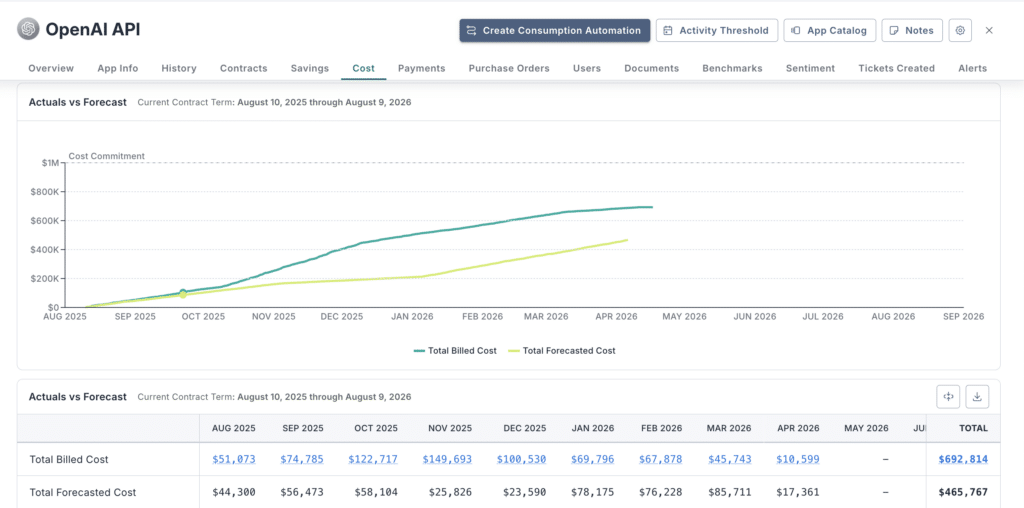
Step 4: Forecast OpenAI API Costs Across the Contract Term
Forecast future OpenAI API costs based on historical consumption patterns. To improve accuracy:
- Analyze cost trends by application or function
- Project future spend based on growth patterns
- Estimate when committed spend will be fully utilized
Forecasting across the contract term helps organizations plan capacity, avoid overages, and optimize financial commitments.
Zylo applies historical consumption data to forecast OpenAI API costs, helping teams anticipate spend and adjust before costs escalate.
Step 5: Break Down OpenAI API Costs by Team, Application, and Workflow
Understand exactly what is driving OpenAI API costs by analyzing usage across key dimensions. You should be able to:
- Identify which models generate the most spend
- Pinpoint high-cost workflows or initiatives
- Understand which areas of the organization drive the most cost
Breaking down usage at this level creates observability, connecting cost to the teams and activities responsible for it.
Zylo delivers this visibility by mapping OpenAI API consumption across models, applications, workspace, and teams, making it easier to prioritize cost optimization efforts.

Step 6: Allocate OpenAI API Costs and Establish Accountability
Assign ownership to OpenAI API costs to improve accountability and financial control. You should be able to:
- Attribute costs to specific teams or business units
- Align usage costs with budgets and financial targets
- Measure ROI for AI-driven initiatives
Clear cost allocation ensures that OpenAI API spend is tied to ownership and business outcomes.
With Zylo in place, organizations allocate OpenAI API costs at a more granular level, linking consumption-driven spend to the teams responsible for it.
These capabilities establish a consumption cost management framework that shifts OpenAI API cost control from reactive reporting to proactive financial management.
Key Takeaway:
Controlling OpenAI API costs requires connecting consumption to cost, monitoring spend continuously, and assigning ownership across the organization to maintain financial control at scale.
OpenAI API Pricing vs Other LLM Providers
OpenAI API pricing aligns with other leading LLM providers, including Anthropic and Google Vertex AI, using token-based, usage-driven pricing. Costs are typically based on input tokens, output tokens, and model capability.
Pricing Comparison Overview
While pricing models are structurally similar across providers, total cost varies based on how efficiently each model handles a given workload. To evaluate pricing, it requires looking beyond token rates to understand how usage patterns, workflow design, and model performance impact overall spend.
Why Direct Price Comparisons Fall Short
Token rates alone do not reflect total cost. Actual spend depends on:
- Number of API calls per workflow
- Token efficiency per task
- Model performance (fewer vs multiple requests)
Even if you use a lower-cost model, it can generate higher total cost if it requires more steps or retries.
Multi-Provider Usage Increases Complexity
Many organizations use multiple LLM providers across applications, which creates the following challenges:
- Usage and cost data are fragmented
- Pricing structures vary slightly
- Cost drivers are harder to compare
Without a unified view, teams lack clarity on total AI spend and efficiency.
Normalize and Compare Costs Across Providers
To evaluate pricing effectively, standardize how costs are measured:
- Compare cost per outcome, not just cost per token
- Evaluate total workflow cost, not individual requests
- Analyze usage patterns across providers
Zylo supports this by bringing OpenAI API and other provider data into a single system, allowing teams to compare costs using consistent metrics and identify the most efficient options.
Control OpenAI API Costs Before They Escalate
OpenAI API costs can escalate quickly as usage scales across teams and applications. Without clear visibility into what’s driving spend, overages are often identified too late to prevent, creating financial risk through unexpected cost spikes and budget overruns. Staying in control requires monitoring consumption continuously and acting early to keep costs aligned with budget.
Zylo’s Consumption Cost Management Solution provides the visibility and control needed to stay ahead of OpenAI API spend. Request a demo to see how Zylo connects OpenAI API consumption to cost and prevents overages before they occur.
FAQ: OpenAI API Pricing and Cost Optimization
OpenAI API pricing is based on tokens, with separate rates for input and output. Costs vary by model, but pricing is typically structured per 1 million tokens. For example, mid-tier models may cost a few dollars per million input tokens and more for output tokens. Total cost depends on how many tokens your application processes per request and at scale.
To calculate OpenAI API costs, use this formula:
- Total Cost = (Input Tokens × Input Price) + (Output Tokens × Output Price)
Then multiply by total request volume. Accurate estimates require factoring in token usage per request, number of API calls, and model pricing. Real-world costs often exceed estimates due to retries, multi-step workflows, and scaling usage.
Lightweight models (often labeled mini or nano) are typically the cheapest for OpenAI API usage. They are best suited for high-volume, simple tasks such as classification or data transformation.
However, the lowest-cost model per token does not always result in the lowest total cost. Model performance, number of requests, and workflow design all influence overall spend.
OpenAI API costs are difficult to predict because they scale with real-time usage. Cost variability is driven by:
- Changes in API call volume
- Token usage fluctuations
- Multi-step or agent-based workflows
- Lack of visibility across teams and applications
Without continuous monitoring, costs can increase quickly and exceed expectations.
Tracking OpenAI API usage requires connecting consumption data (tokens, API calls) with cost data in a centralized system. Platforms like Zylo provide visibility into spend across applications, cost trends over time, and consumption against budgets or committed spend. This data enables teams to monitor usage continuously and take action before overages occur.
Reducing OpenAI API costs requires a proactive approach to AI cost optimization and consumption cost management. Key strategies include:
- Reducing unnecessary API calls
- Eliminating redundant processing
- Monitoring cost burn rates
- Setting alerts for usage thresholds
- Identifying and optimizing high-cost workflows
Effective AI cost optimization focuses on reducing unnecessary consumption while improving cost visibility and control.
Consumption cost optimization is the practice of tracking, analyzing, and controlling usage-based costs tied to OpenAI API consumption. It focuses on connecting usage (tokens, API calls) to cost, identifying cost drivers across applications and teams, forecasting and aligning usage with budgets or commitments, and taking action before costs exceed expected thresholds. This approach enables organizations to manage OpenAI API spend proactively instead of reacting after costs occur.
Preventing OpenAI API cost overages requires proactive monitoring and AI cost optimization practices. IT, SAM, and FinOps teams should:
- Monitor consumption costs against budgets and commitments
- Set threshold-based alerts
- Detect anomalies early
- Adjust usage before costs exceed limits
With the right visibility and controls, organizations can prevent overages and maintain predictable OpenAI API costs.
Cost allocation requires mapping usage data to ownership. Organizations should attribute API usage to teams, applications, or business units, track spend by owner, and align usage with budgets and accountability. Solutions like Zylo enable granular cost allocation, helping organizations connect OpenAI API usage to the teams responsible for it.
To optimize OpenAI API costs at scale:
- Focus on consumption efficiency
- Connect usage to cost
- Monitor burn rates
- Allocate cost across teams
- Use a SaaS spend optimization tool like Zylo
Check Out These Related Resources
How to Control OpenAI API Costs Before They Escalate

FinOps Cost Optimization: How to Save on Cloud and SaaS Costs
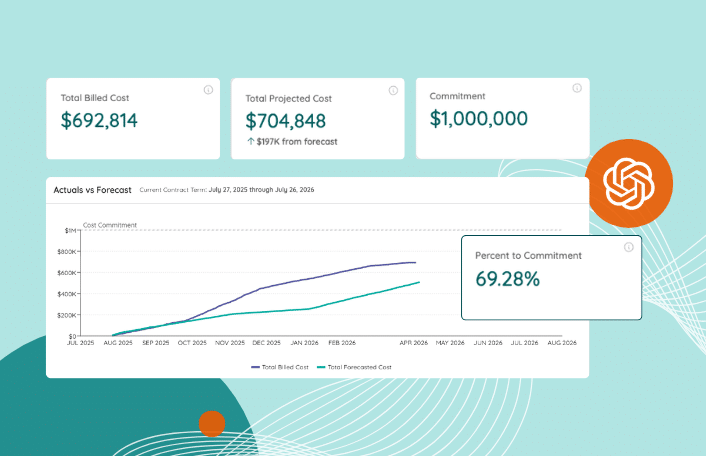
Stop Cost Overruns with Zylo’s Consumption Cost Management Solution

The Best Software Asset Management Tools for SAM Teams in 2026

Best SaaS Spend Management Software for Finance & IT Teams in 2026

The Essential SaaS Compliance Checklist for 2026

Cloud Budgeting Isn’t Complete Without SaaS Budgeting. Find Out Why

5 Industry Experts Weigh In on the 2026 SaaS Management Index

Guide to SaaS Compliance Software—Tools, Risks & Best Practices